
A packaged ERP is enough
Your accounting, purchasing, stock and sales follow the usual pattern. You can live with the package's model, and the few gaps close through configuration. In that case we tell you so before any quote.
Custom ERP development
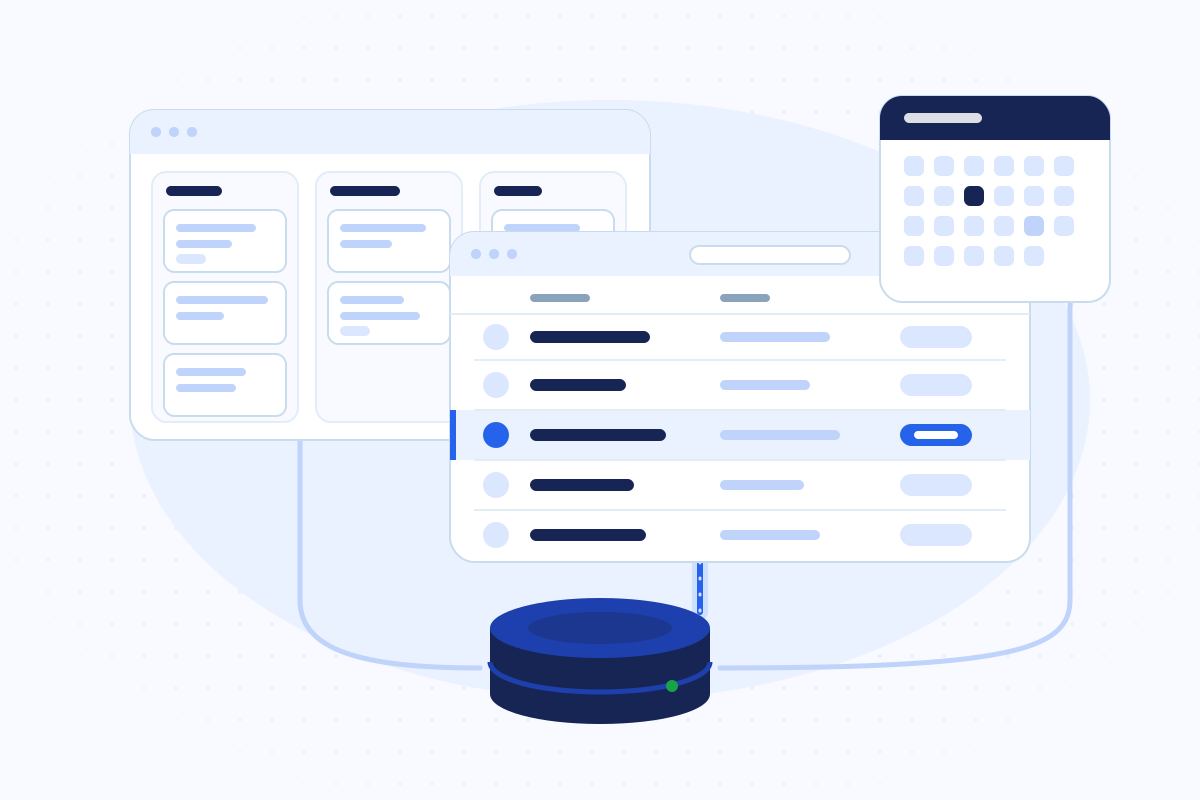
Sindan Solutions builds custom ERPs for SMEs in Algeria on top of Dido, its own management software already in production. Invoicing and stock already exist, so we build your own workflow on top: your documents, your production steps, your approval rules.
Why start from a base
Cegid, the French software vendor, puts the initial build of a fully specific ERP for an SME at 150,000 to 800,000 euros, over a 9 to 18 month project, before annual maintenance. Most of that budget rebuilds what every company shares: customers, items, invoices, stock, cash.
Dido already has those modules, 28 in all, running in production. Your budget goes to what sets you apart, such as a production sheet, an approval chain or a document your customer insists on.
The Cegid figure at the source (French)Making the call
A well-chosen packaged ERP costs less than a custom build nobody needed. Here is how we decide.
Your accounting, purchasing, stock and sales follow the usual pattern. You can live with the package's model, and the few gaps close through configuration. In that case we tell you so before any quote.
Your team keeps a second version of the truth in a spreadsheet, your pricing, production or delivery rules resist configuration, or the way you produce is an edge you want to keep. Each workaround costs hours every week.
Cegid also notes that a configured ERP costs 3 to 5 times less to build than a specific one of the same scope. Starting from a running base is how we narrow that gap.
The base
You keep only the ones you use. The base module covers sales and stock, and the others come one at a time.
Quotes, orders, delivery notes, invoices in dinars with VAT, returns and credit notes, receivables and follow-up.
See the sales and invoicing moduleProspects stay apart from customers until they convert. A pipeline by stage, calls, visits and tasks, with a daily agenda.
See the CRMPurchase orders with approval, partial receipts, returns to suppliers, landed costs, a payment schedule and a statement per supplier.
Stock by location, adjustments and transfers between warehouses, with replenishment rules.
Where a batch came from, what expires soon, and which customers received a batch.
A recipe lists the components of one finished unit, down to the dose. A production order gets a batch number, then takes the components out and puts the finished goods in as one transaction, with scrap and its reason.
See the production moduleEach machine has its own calendar. The contract books it, the actual departure and return set the billed time, and the deposit stays separate from the advance payment.
See the equipment hire moduleA construction customer keeps one account with its sites underneath. Invoiced, collected and still owed read site by site.
Cash drawers, bank and CCP accounts, drawer shifts closed on the counted amount, cheques held until they go to the bank.
Stock per van, loaded on a slip and checked when it comes back, with the discrepancy of each round and each salesperson's day.
See the van sales moduleMonthly attendance, advances, monthly or daily pay, overtime, and the month's pay computed from the attendance records.
See the payroll and attendance moduleSales by period, customer, item and salesperson, estimated margin, stock value. One role per person decides what they see and can do.
Two filmed examples
Two workshops, two ways of producing, one base. The films show the real screens, narrated in French.
The quote, the production sheet, the workshop tasks and the delivery, in Dido.
Watch the joinery film (French)The recipe, sawing, polishing and finishing, tracked step by step.
Watch the marble workshop film (French)The Dido sign-in page offers demo accounts, with the password example. You can see the base before you talk to us.
Algerian rules
From 1 January 2027, an Algerian company under tax audit must prove that its till and accounting data cannot change after the fact. In Dido, an issued invoice and an approved credit note never change, and you fix a mistake with a new numbered document.
Law 25-11 on personal data requires a register of processing and an automatic log of operations on that data. We write those duties into the project scope with everything else.
What the 2027 rule requires (French)What Law 25-11 changes for business software (French)How it runs
Each stage ends with a result you can read or try, and we wait for your go-ahead before the next one.
Deliverable · Written scope
We watch your team work and write down what the software will do.
Deliverable · Approved screens
You walk through the screens and approve the data before any code.
Deliverable · Testable version
Your own workflow arrives in blocks your team can try.
Deliverable · System in service
Data migration, training and a rollback plan ready before the switch.
Deliverable · Ongoing support
The same team monitors, fixes and extends the software.
Questions
The price depends on four things: how many modules need adapting, the screens and rules specific to your business, the data migration, and the links to your other software. We quote after discovery. For reference, Cegid puts a specific ERP written from scratch at 150,000 to 800,000 euros for an SME. Starting from Dido is how we stay well below that range.
We give no timeline before discovery, because any figure we gave before seeing your organisation would be a guess. The common modules already exist, so the project time goes to your own workflow. Cegid counts 9 to 18 months for a specific ERP written from scratch.
The code written for your project and your data are yours, and you can walk away with them. The rights to the Dido base itself are set out in the contract, in writing.
We host, back up and monitor it, like our other software. The location, in Algeria or abroad, comes out of discovery, based on where your team works and what your obligations say about where data may sit.
Yes. We import items first, then opening stock, then customers and suppliers, from spreadsheets. Another ERP gives us those spreadsheets through its exports. You see every row in a preview before Dido writes it, and running the import again creates no duplicates.
Yes, and we recommend it. The first module fixes your most expensive problem, often invoicing or stock. The others follow once the first one runs.
Those are packages. You configure their model, and each specific module has to follow their new versions, often through an integrator. With Dido, the base and your changes come from the same team that wrote the code. If your business fits a package's model, take the package.
Yes, remotely, in English or French. Dido counts in Algerian dinars today, with purchases possible in euros or dollars. For a company in Europe or elsewhere, currency, VAT and local invoicing rules go into discovery and into the quote.
Guides
What moves the price of business software, how to read a quote line by line, and which questions to ask before you sign.
Read the guide
Compare ERP, off-the-shelf software and custom development on a simple grid: processes, real cost, integrations, ownership and how each one changes over time.
Read the guide (French)
Spreadsheets kept in parallel, wrong stock, a start date that keeps moving. The causes of a stalled ERP project and a four-step plan to restart it.
Read the guide (French)
How to state what a business system must do without writing a technical novel: goals, users, workflows, rules, data, security and acceptance.
Read the guide (French)Bring your current documents. We will tell you what Dido already covers and what the project would need to build.