
How we work
From a written scope to software in service
A written scope before any code, approved screens before the build, and a regular progress report all the way to go-live.
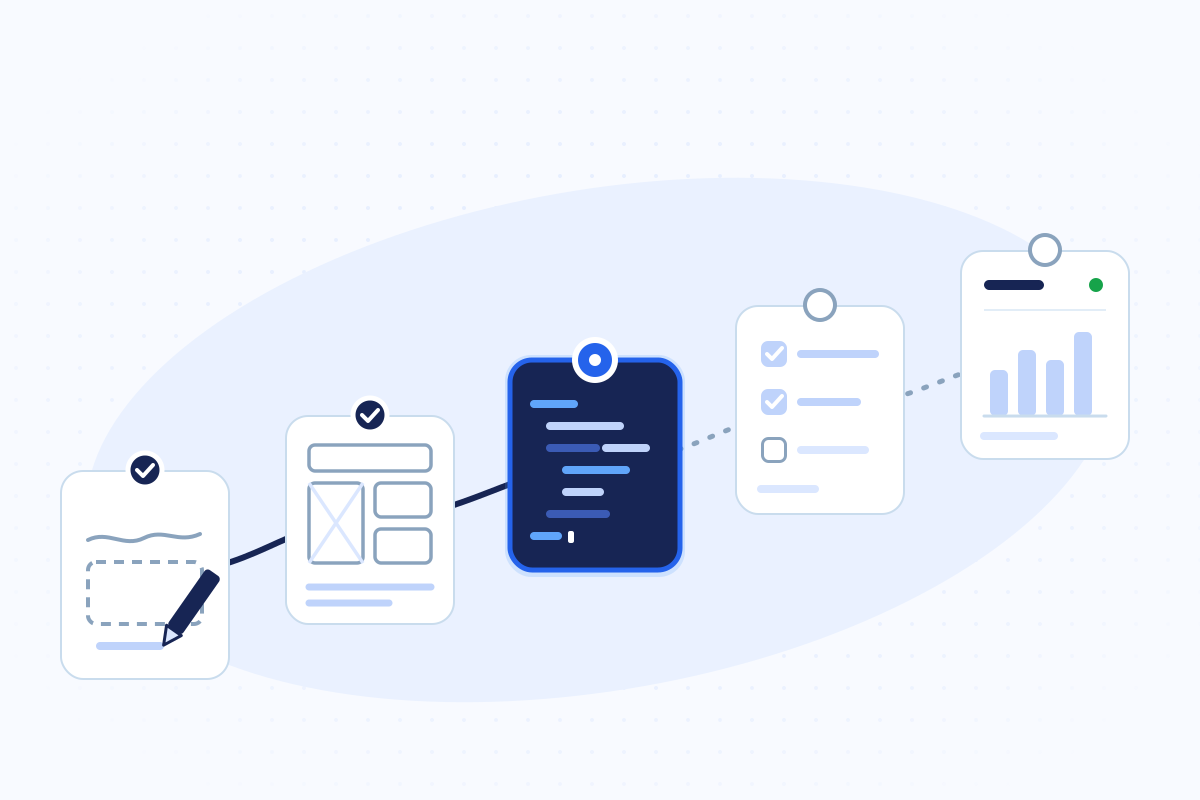
The sequence
Five stages, in this order
Each stage ends with a result you can read or try, and turn down if it is not right. We do not move to the next one until you approve it.
Deliverable · Written scope
Discovery
We watch the real work and agree on a precise scope.
See details
We look at the spreadsheets, notebooks and chat threads that make up for the current tool. Then we write down what the software will do, what it will not, and in what order.
Deliverable · Approved design
Design
You walk through the screens and approve the data before any code.
See details
We draw the screens, data and architecture early, while changing your mind is still simple and cheap.
Deliverable · Testable release
Build
The product grows in working blocks your teams can try.
See details
Your teams use each block on real cases. We fix whatever does not fit the day-to-day work in the next block.
Deliverable · System live
Go-live
We prepare the data, the training and a way back before you switch over.
See details
The data migration, hosting, backups, monitoring and a safe rollback procedure are all in place before the first day.
Deliverable · Ongoing support
Operation
The same team monitors, fixes and extends the software.
See details
Security patches, updates and new features stay with people who already know the system.
Our working rules
What you can expect from us
These are the rules we hold ourselves to on every project, and you can hold us to them.
Ask your questionsFrequently asked
What companies ask us before starting
01How long does it take?
It depends on scope. We give no timeline before the discovery stage, because before we have looked at how you work, any number would be a guess.
02How do you set the price?
From the written scope at the end of discovery. You know what is included before you commit to the build.
03What if our needs change along the way?
They almost always do, which is why we deliver in blocks. After each block, we reorder with you what is left to build.
04Do we have to replace everything at once?
No, and we advise against it. We start with the most expensive pain point, put it live, then expand.
05What happens to our existing data?
We migrate it at the go-live stage, including out of spreadsheets, which is the most common case.
06What happens after delivery?
The operation stage covers security patches, updates, monitoring and new features. We handle it.
Discovery is where we start
One conversation is enough to know whether the project holds up. It commits you to nothing.