
Sales and invoicing
Quotes, orders, delivery notes, VAT invoices, returns and credit notes, prices by customer type and quantity offers.
See sales and invoicingERP Algeria
Dido is an Algerian ERP made by Sindan Solutions in Saoula, Algiers. Sales, purchasing, stock, cash, production, accounting and VAT returns sit in one database, in dinars, with a French interface. It already runs in production. Try it on a sample account, then we put it into service as it is or add your own screens and steps.
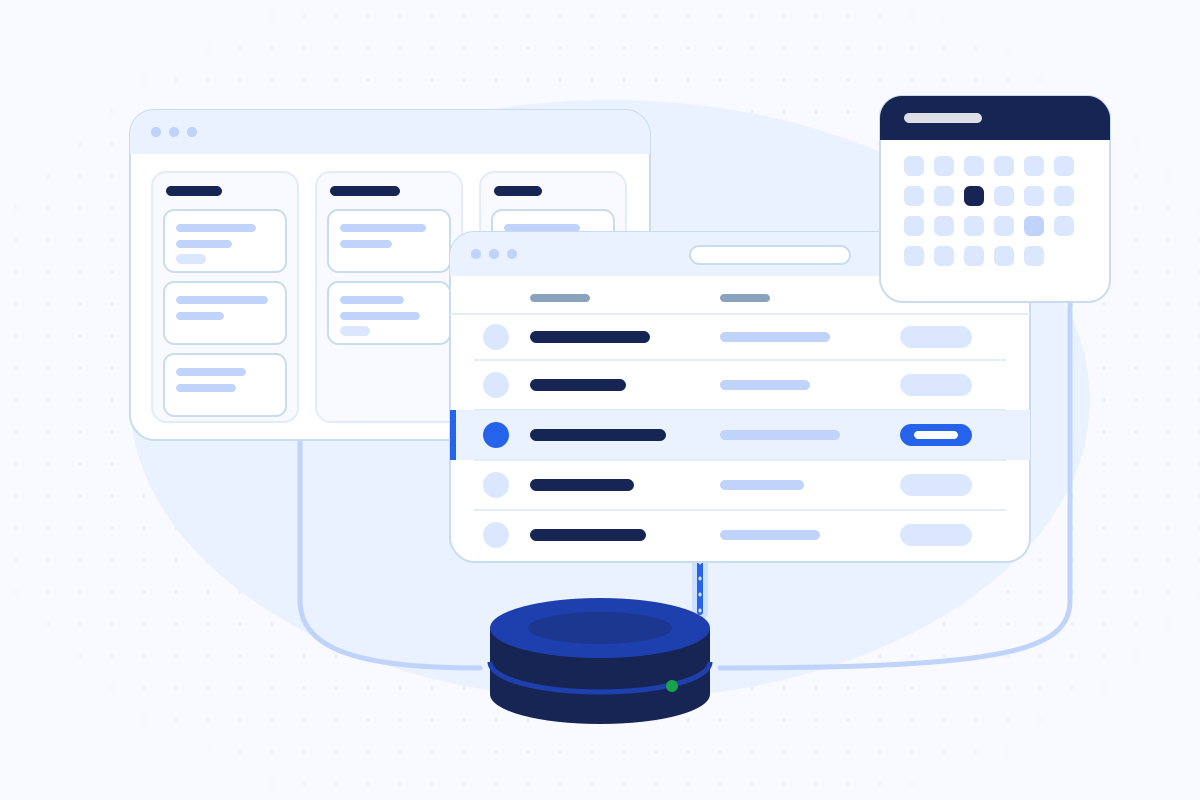
Video · 1 min 54
The modules, opening an account, the sample account and a first invoice. The film is in French.
Open the sample accountDido, logiciel ERP algérien : présentationWhy an Algerian ERP
An ERP designed for France or the United States knows nothing of the G50 return, CCP postal accounts, or the cheque that waits in a drawer before it goes to the bank. You then need an integrator to adapt it, and to adapt it again at every new version.
Dido starts from how Algerian businesses work. The dinar is the base currency, VAT follows the current rates, and Dido already applies the finance law that freezes cash and accounting data from 1 January 2027. Nobody can edit an issued invoice, and a numbered credit note corrects it.
The modules
Start with what costs you most today, often invoicing or stock, and add the rest once the first module runs.
Quotes, orders, delivery notes, VAT invoices, returns and credit notes, prices by customer type and quantity offers.
See sales and invoicingPurchase orders with approval, partial receipts, landed costs, payment schedule and supplier statements.
Stock by location, transfers between warehouses, stock counts and reorder suggestions.
See inventory and distributionWhere a batch came from, what expires soon, and which customers received it.
See batch traceabilityRecipes with exact dosing, production orders numbered by batch, components out and finished goods in as one operation.
See productionOne stock per van, loaded on a note and checked on return, with each round's shortfall and each salesperson's day.
See van salesProspects, a pipeline by stage, calls, visits and tasks, with a daily agenda per salesperson.
See the CRMDrawer opening and closing on the counted amount, cheques, transfers between accounts, receivables by age.
Entries generated from documents, trial balance, general ledger, financial statements, the month's G50 and G no. 9.
Monthly attendance, advances, monthly or daily pay and overtime.
See payroll and attendanceA calendar per machine, contracts, check-out and return, deposit kept apart from the advance payment.
See equipment hireSales by customer, item, salesperson and van, margin, stock value. Each role decides what a person sees and can do.
Comparison
Three ways to run a small business in Algeria. The Dido column only repeats what this page describes.
| Question | Excel and invoicing software | International ERP | Dido |
|---|---|---|---|
| Stock, sales and cash | In separate files, matched by hand | In one database, after configuration | In one database from day one |
| G50 and G no. 9 | Copied from the invoices every month | Depends on the integrator and its local add-ons | Prepared from the month's invoices |
| Cheques, CCP, customer credit | Kept in a notebook or a spreadsheet | To be adapted | Built into cash and collections |
| Frozen data required in 2027 | Any cell can change at any time | Check with the vendor | Nobody can edit an issued invoice or an approved credit note |
| Who answers you | Nobody | An integrator who did not write the software | The team that writes Dido, in Algiers |
If your business fits an international ERP and you have a good integrator, keep it. We will tell you so before any quote.
Choosing
Six questions to ask every vendor during the demo. Our guide covers all ten points, with the legal texts.
A shared login never tells you who did what. In Dido, each role sets what a person sees and does.
Items, opening stock, customers and suppliers come from your spreadsheets. Ask for the import in the quote. With us, it is part of going live.
With an Algerian vendor, the team that writes the software answers you. At Sindan, the same team installs, trains and fixes Dido.
NIF, NIS, RC and article d'imposition belong on every invoice. Dido takes them from the company record.
Ask for an invoice with two VAT rates, then redo the G50 by hand. Dido fills the worksheet in the order of the form.
Every document should post to the SCF chart of accounts. In Dido, a validated entry stays fixed and a reversing entry corrects it.
Access and security
An ERP holds your prices, your margins and your books. This is how Dido decides who touches them and what stays on record.
By industry
Batches, expiry dates, van rounds and prices by customer type.
See food distributionConstruction customers with their sites, deliveries and credit.
See building materials suppliersFrom quote to production sheet, with real cost against the agreed price.
See joinery and workshopsWeighing, commission and crates, in a separate app in French and Arabic.
See the commission agent softwareGetting started
You see the software before you talk to us, and each step waits for your approval.
Deliverable · Software seen
Open a sample account with the password example.
Deliverable · Modules chosen
We listen to how you work and pick the modules.
Deliverable · Data in place
Items, opening stock, customers and suppliers imported from your spreadsheets.
Deliverable · Team at work
User accounts, roles and training for your team.
Deliverable · Ongoing support
The same team backs up, fixes and improves Dido.
We adapt Dido: screens, steps and rules specific to your trade, on top of the existing modules. The code written for you and your data stay yours.
Questions
An ERP (enterprise resource planning software), called PGI in French, keeps every department of the company in one database. A sale takes the goods out of stock, creates the invoice, waits for payment in the cash book and posts to the accounts, with nothing typed twice. In Algeria it must also keep the books under the SCF, prepare the G50 and invoice in dinars.
The one that fits how you work and whose vendor answers when something blocks. Check at least four points: G50 and G no. 9 returns, tracking of cheques and customer credit, invoices nobody can edit once issued, as the law requires from 1 January 2027, and import of your data from Excel. Dido covers all four, and you can check it yourself on a sample account.
Yes. Sindan Solutions writes and maintains it in Saoula, in the wilaya of Algiers. It counts in dinars, prints the company tax identity on its documents and prepares the G50.
Dido starts at DZD 120,000, paid once. The final amount depends on the modules you take and the number of users, and we confirm it after a short call. The demo is free.
It prepares the month's worksheet in the form's order from the invoices, with the G no. 9 of supplier invoices. A validated month keeps its figures. Filing and payment then happen on Jibaya'tic.
Yes, under the Algerian SCF chart of accounts. Invoices, purchases and cash movements post as entries. You get the trial balance, general ledger, journal, monthly checks and the five financial statements. A validated entry never changes. A reversing entry corrects it.
Not yet. The staff module computes monthly pay from attendance, overtime and advances, but not the IRG and CNAS deductions. Our free net salary calculator applies them in the meantime.
Yes. Items, opening stock, customers, suppliers and the staff file import from spreadsheets. Dido shows every row in a preview before it writes anything.
Those are international packages you configure, often with an integrator. We write Dido for Algerian rules, and the team that answers you is the team that writes the code.
Yes. Each user works in the establishments opened to them, and accounting brings every establishment of the company into one general ledger.
Guides
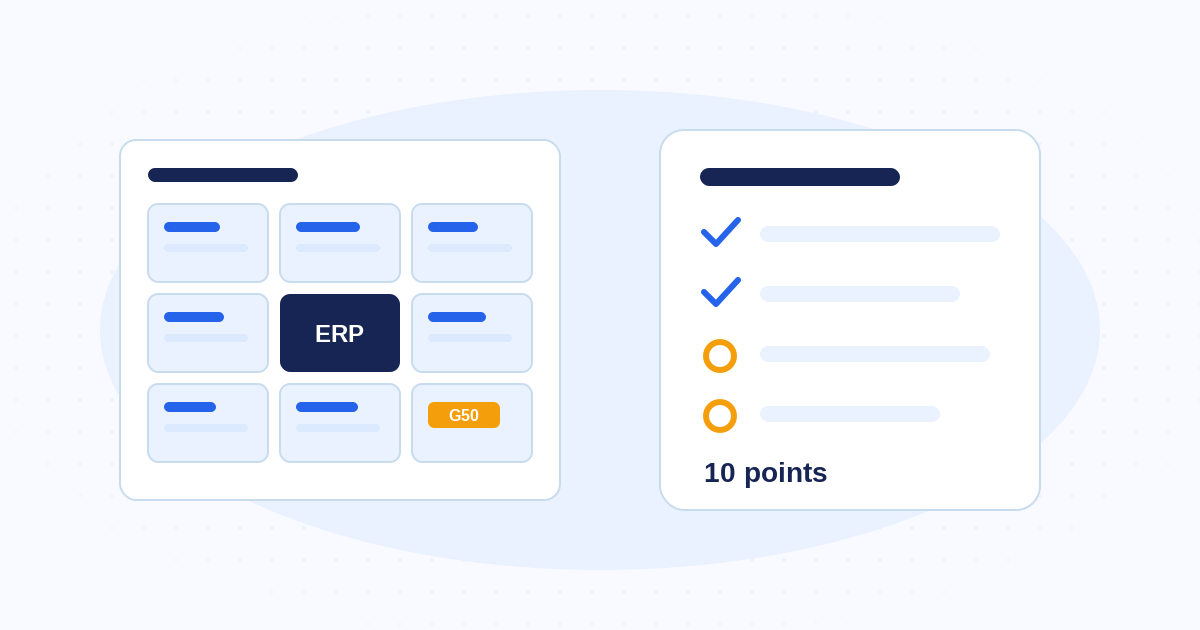
Ten checks before you buy ERP software in Algeria: SCF accounting from documents, the G50 and G no. 9 returns, invoices that cannot change and the publisher statement required from 2027 (finance law 2026), cheques, CCP and cash, stock and batches, several establishments, permissions, data import, local support, and what the price includes. With a Dido column.
Read the guide (French)
Compare ERP, off-the-shelf software and custom development on a simple grid: processes, real cost, integrations, ownership and how each one changes over time.
Read the guide (French)
Spreadsheets kept in parallel, wrong stock, a start date that keeps moving. The causes of a stalled ERP project and a four-step plan to restart it.
Read the guide (French)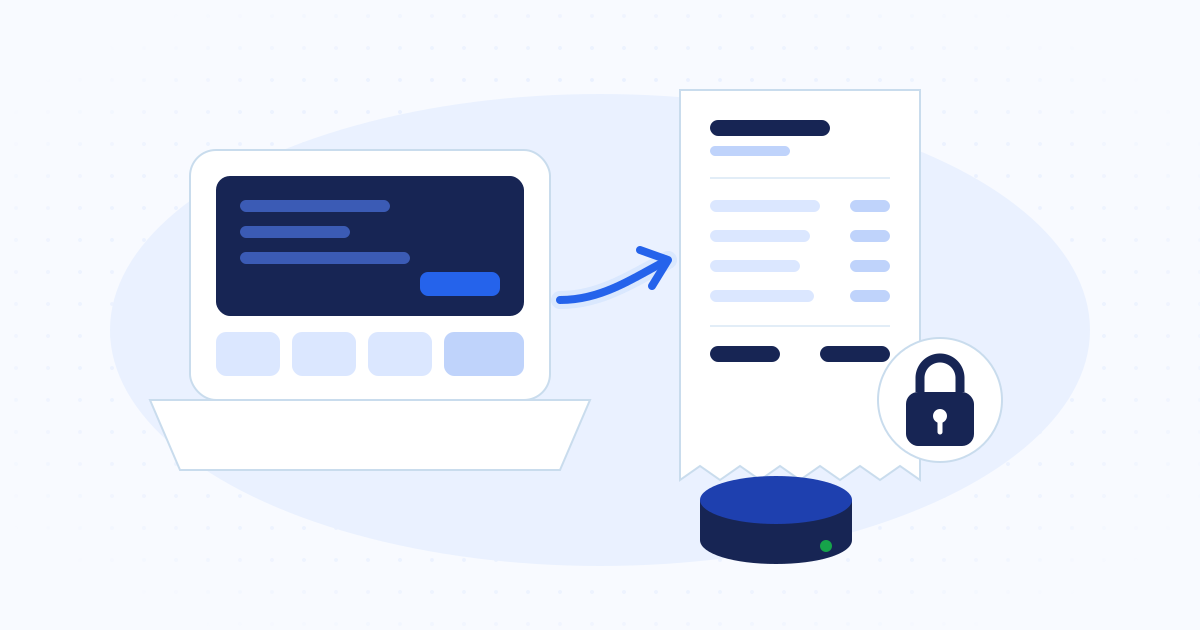
Algeria's 2026 finance law requires proof, during a tax audit, that nobody can rewrite the records kept by till and accounting software, and that the software protects and archives them. What the articles say and what to check.
Read the guide (French)
Who must file online since 1 January 2026, the Jibaya'tic sign-up file, filing the G50 by the 20th, paying by CIB or Edahabia card or bank transfer, and late penalties. Based on the 2026 finance law and the tax office's guides.
Read the guide (French)Dido does not cover every trade. If you need a screen, a report or a calculation rule it lacks, we build it for your company. Tell us what is missing and we send you a price.
Describe your business in a few lines. We come back with the modules that fit and a price.